Buy or sell a website on facts.

A value you can explain, built from the multiples buyers pay on marketplaces, and a due diligence you can check line by line before anyone signs.

Two investors reviewing a website acquisition at night

If you are buying

  • Check the seller's story against what the site shows: revenue streams, affiliate programmes, link counts.
  • See whether search traffic grows or shrinks, and whether it survived Google updates.
  • Confirm the age of the domain from the registry, not from the listing.
  • Find legal and security problems you would inherit: consent, disclosures, certificates.
  • Know where in the market range the multiple belongs, and why.
If you are selling

  • See the website the way a buyer's due diligence will see it, before the listing goes live.
  • Fix what lowers the multiple: one dominant page, one partner programme, missing disclosures.
  • Reduce your own hours on the site; a passive business sells for more.
  • Hand over a report with the evidence, so the buyer argues about facts.
  • Scan again after the fixes and show what changed.
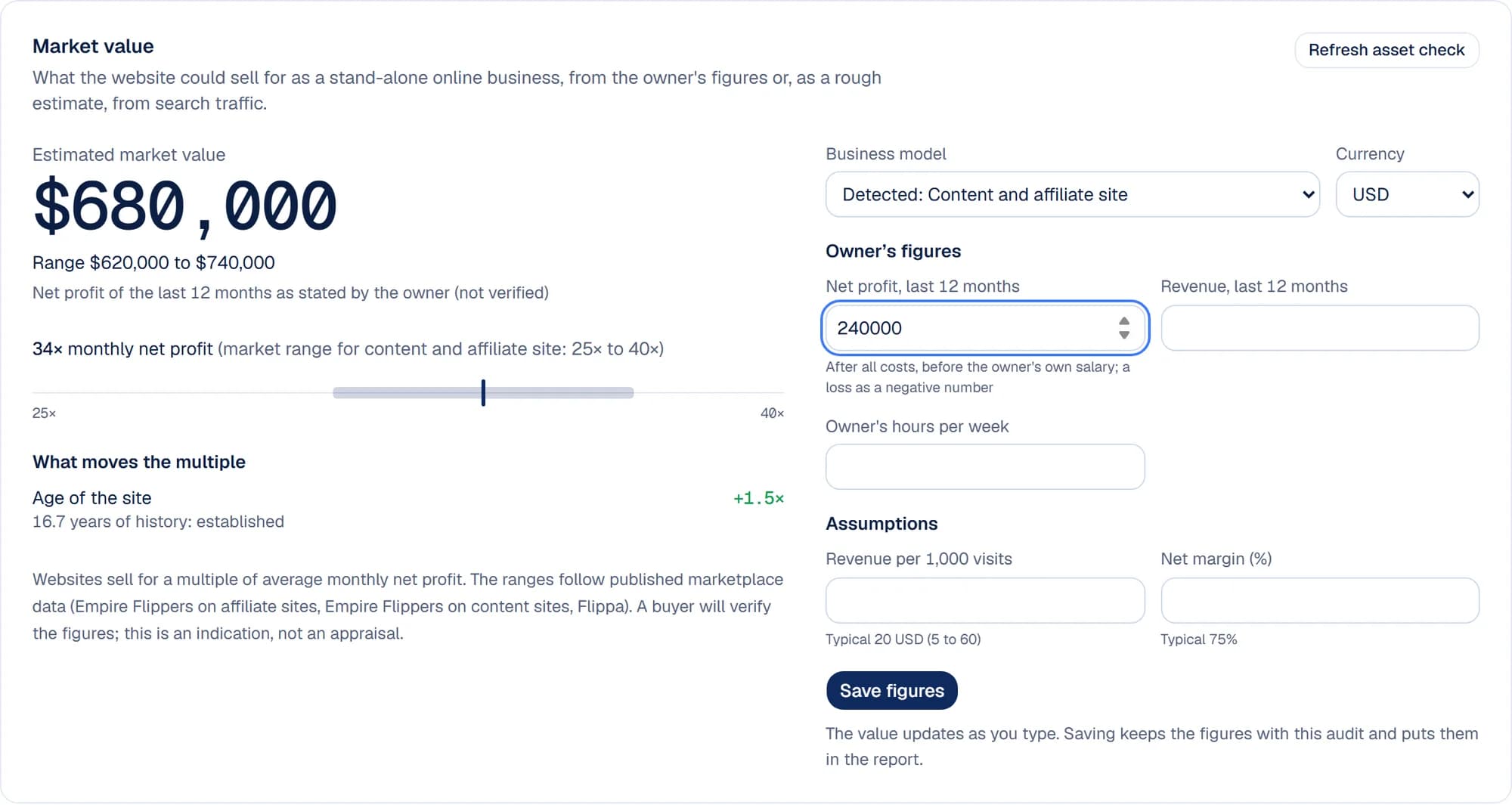
Market value of a content publisher with the multiple and its range

A price with its reasons.

The value is a multiple of average monthly net profit. Where the owner’s figures are missing, the tool estimates from search traffic and labels it as an estimate. It never presents an estimate as a fact, and a buyer still verifies the figures.

How the valuation works

The due diligence, from outside.

Everything is read the way any visitor would see the site. Nothing is probed or attacked, and every line says what it rests on.

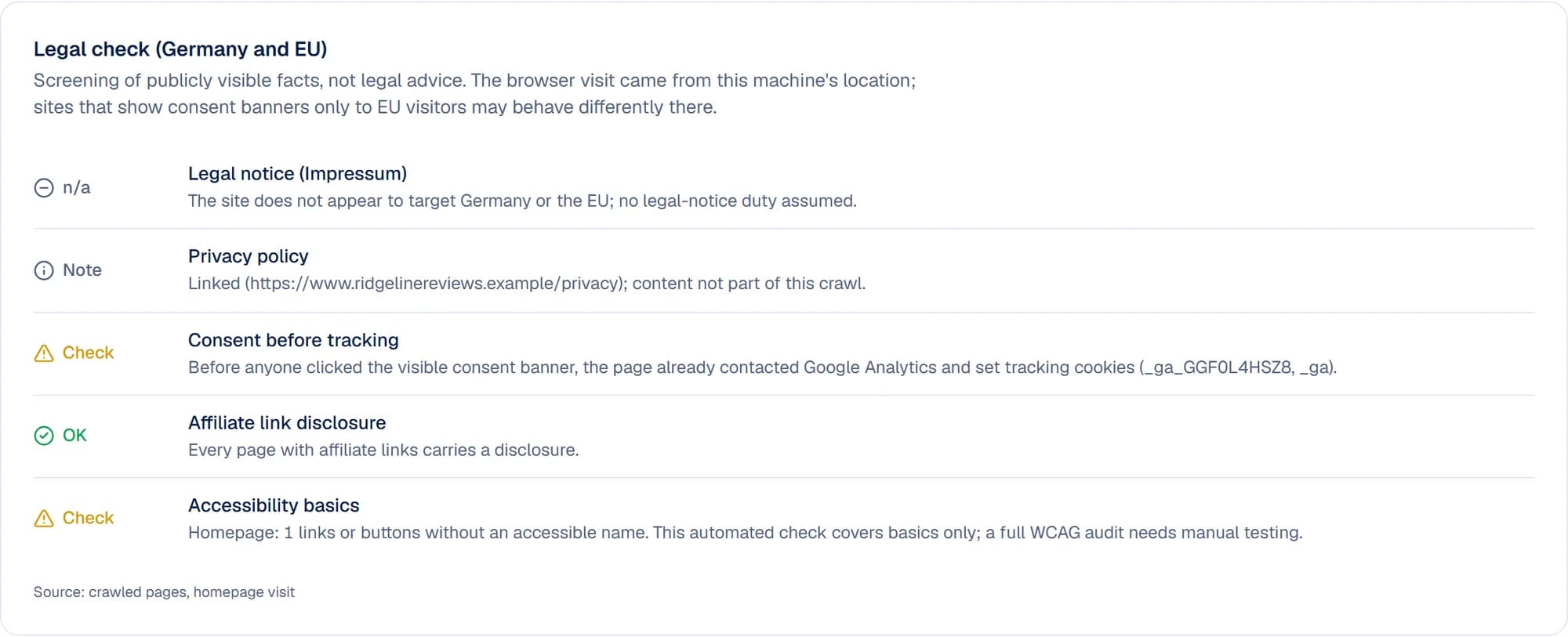
Legal check with consent before tracking flagged
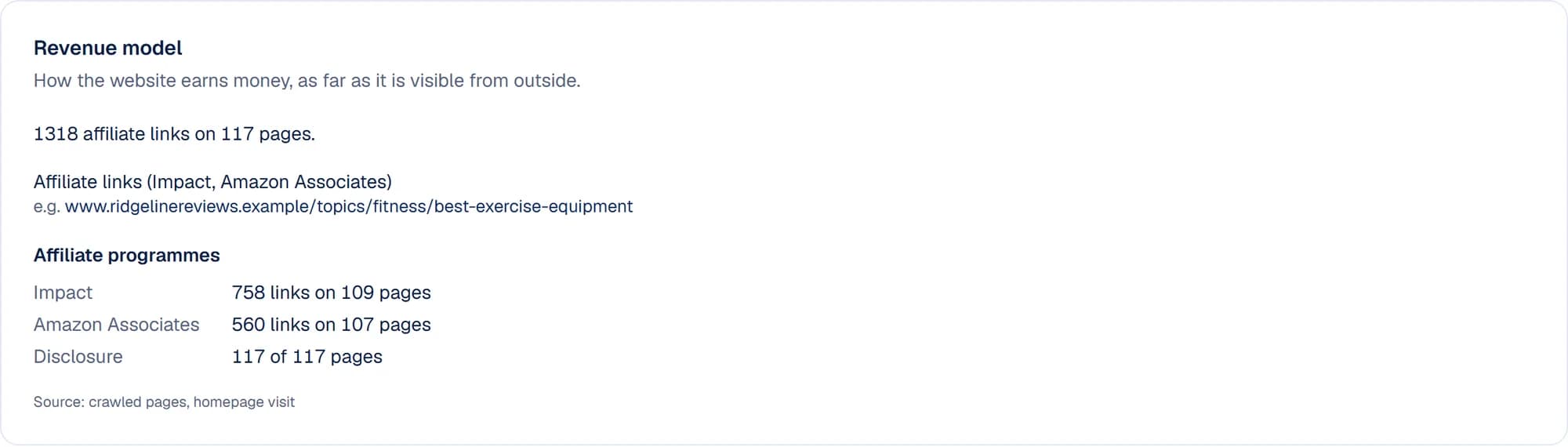
Revenue model: 1,318 affiliate links on 117 pages
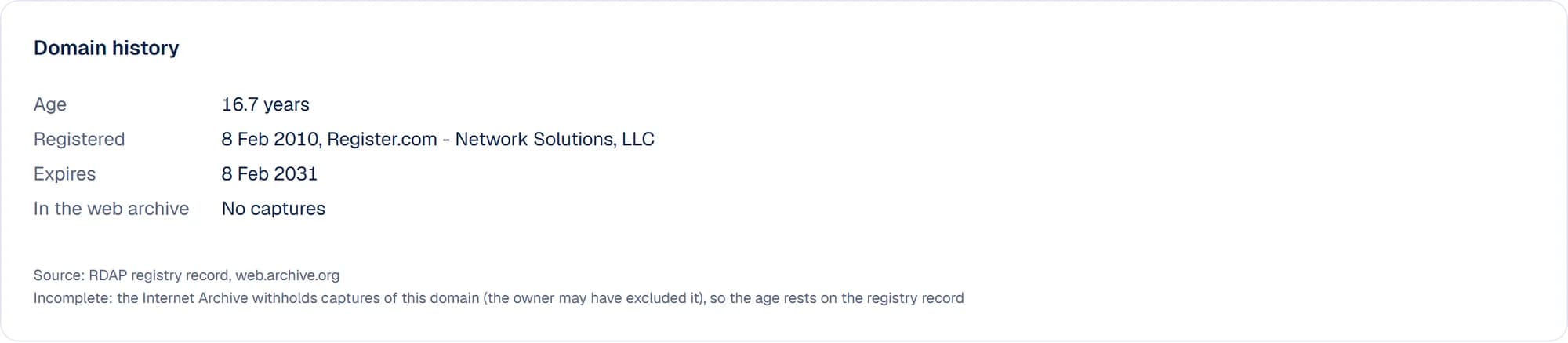
Domain history: 16.7 years, registered in 2010
  • Revenue modelHow the site earns money as far as it is visible from outside: affiliate programmes, ads, shop, subscriptions, with link counts per programme.
  • Search trafficEstimated organic visits, the trend year on year, ranking keywords, referring domains and losses in Google updates.
  • Domain historyRegistration date, registrar, expiry and the web archive record, so the age of the business is a fact, not a claim.
  • Technology and running costsPlatform, visible paid tools, maintenance effort and what a buyer actually receives at handover.
  • Legal check (Germany and EU)Imprint, privacy policy, consent before tracking, affiliate disclosure and accessibility basics, as publicly visible facts.
  • Security hygieneCertificate, HTTPS redirect, HSTS, content security policy, cookie flags and security.txt, checked from outside only.
  • Visibility in AI assistantsWhether AI crawlers may read the site, llms.txt, structured data, and whether assistants know the brand.
  • ReviewsPublic ratings on Trustpilot and the Google Business Profile, where they can be read.

Compare before you choose.

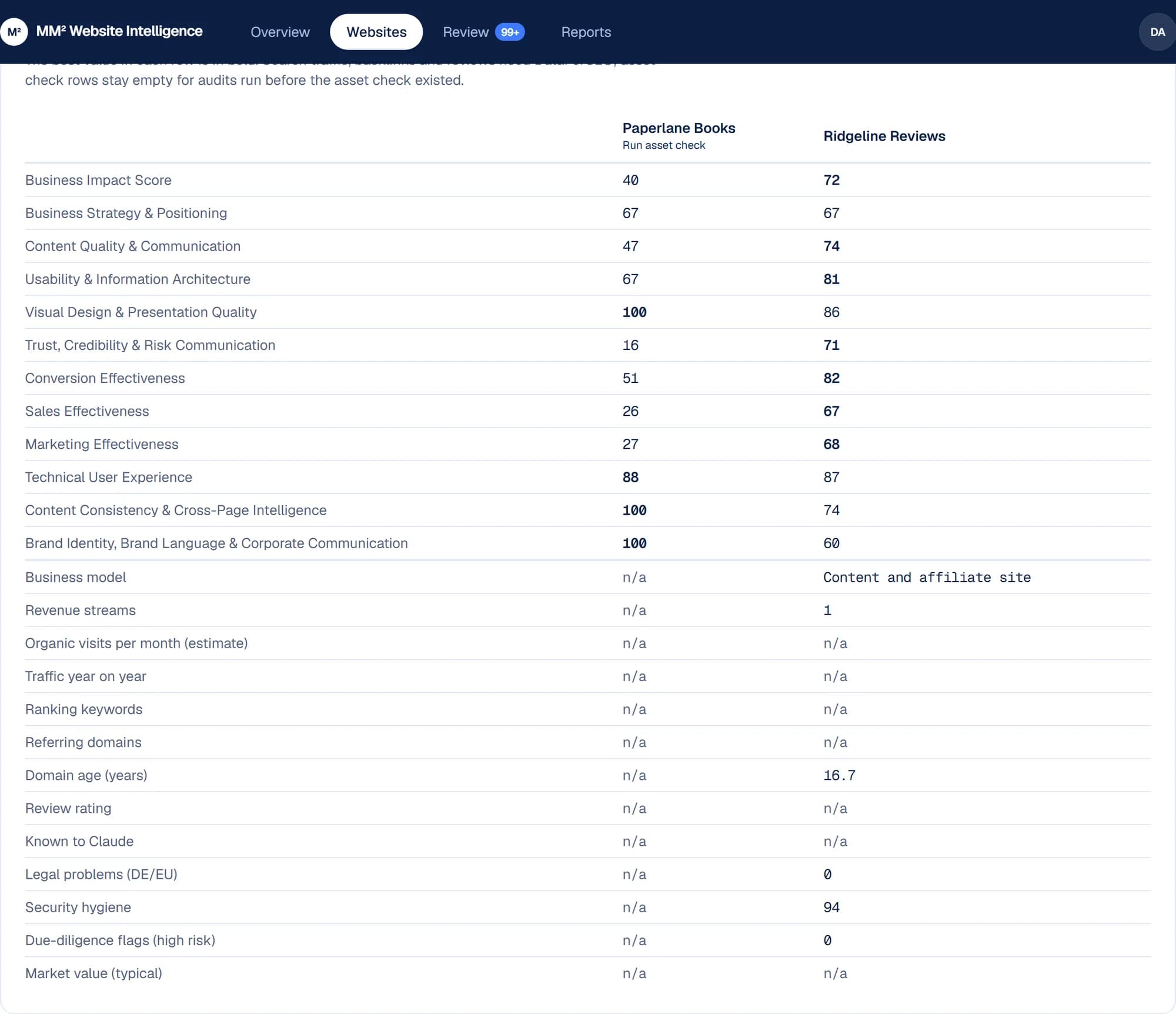
Looking at several sites? Put them side by side: score, traffic, backlinks, domain age, legal problems, security and market value. The best value in every row stands out.

Two websites compared side by side

Check the site before the deal.

Start free with a quick check, then run the full audit with search data on the site you are buying or selling.